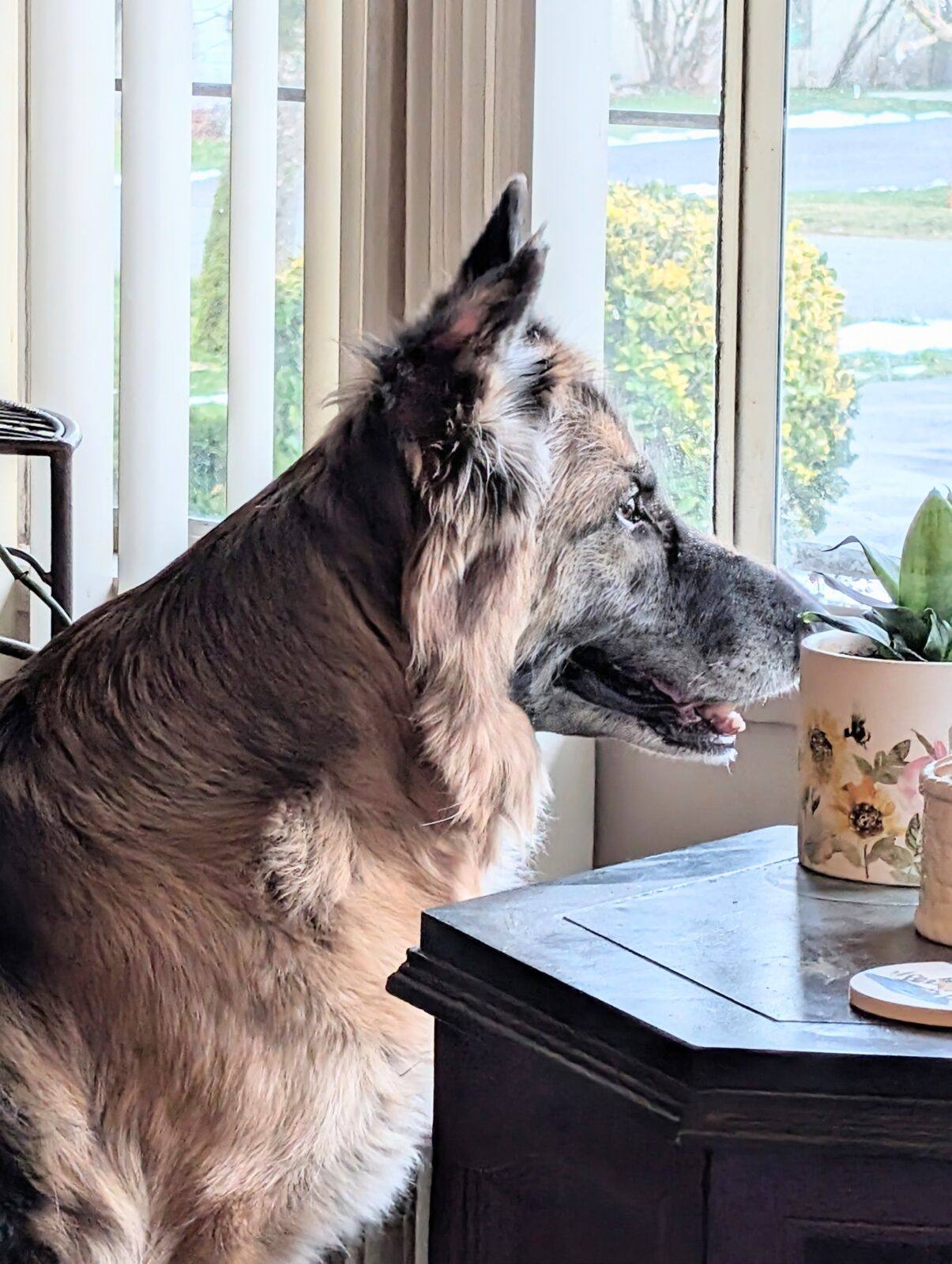
Long-haired German Shepherd behaviour: If your dog feels intense, observant, or hard to read — you’re not imagining it.
This is where that starts to make sense.
If you’re new to the breed, begin with the Start Here guide before going deeper. It will give you the structure needed to understand what you’re seeing.
Long-haired German Shepherd behaviour is often misunderstood.
Not because the dog is complicated — but because most people are reading the surface and missing the mind behind it.
This is a working mind in a companion world.
They notice more. They remember more. They read people faster than most owners realize. And when they are misunderstood, the fallout shows up in behaviour, stress, conflict, and broken trust.
The Shepherd Mind is the behaviour library behind Fluffy Shepherds — built from real-world ownership, rescue experience, and living with dogs that do not simply “switch off.”
Why this page matters
Most people look at behaviour from the outside.
They see barking, staring, pacing, guarding, pulling, shutdown, overreaction, clinginess, tension, or resistance — and they label the dog.
Stubborn. Dominant. Reactive. Difficult.
That is where things start going wrong.
Behaviour is information.
A German Shepherd does not move randomly. There is a reason behind what you are seeing. When you learn how to read the dog properly, everything becomes clearer — and your response becomes more effective.
That does not mean every behaviour is acceptable.
It means behaviour must be understood before it can be changed.
This is where understanding long-haired German Shepherd behaviour changes everything.
What makes long-haired German Shepherd behaviour different
Long-haired German Shepherds are not easygoing, go-with-the-flow dogs.
They are observant.
They are sensitive to patterns, pressure, tone, and inconsistency.
They track what changes.
They notice tension.
They evaluate people.
That level of awareness defines how they behave.
It is also what makes them easy to misread.
When owners misunderstand what the dog is processing, intelligence gets labeled as defiance, caution as weakness, and stress as “bad behaviour.”
That kind of misread creates problems fast.
👉 Why your German Shepherd is always watching
👉 Why they follow you everywhere
👉 Why your German Shepherd won’t settle
What this library is built on
This is not theory.
Everything here comes from real-world experience:
- rescue and decompression
- multi-dog dynamics
- dogs living with cats
- trust-building after instability
- behaviour under stress
- structure inside the home
No fluff. No recycled advice.
Just what actually holds up long-term.
How to use this page
Do not try to read everything at once.
Start with what you are seeing in your dog right now.
Then follow the connections.
That is how understanding builds — not all at once, but piece by piece.
Behaviour Library
This is the working library behind everything on this site.
Core Foundations
- The First Rule of Meeting a German Shepherd
- Eye Contact and the Shepherd Mind
- Calm vs Compliance
- Drive vs Anxiety
Environmental Processing
- Why Dogs Need to Sniff on Walks
- Scanning & Awareness (coming soon)
- When a Shepherd Locks In (coming soon)
Rescue & Decompression
- The First Weeks After Rescue
- Shutdown Behaviour (coming soon)
- Trust Building (coming soon)
Household Dynamics
- Living With Cats (coming soon)
- Multi-Dog Balance (coming soon)
- The Shepherd and the Old Dog (coming soon)
This is not about control
This is not about dominance.
This is not about forcing behaviour.
This is not about trying to win.
This is about understanding the dog clearly enough to lead well.
Because with this breed, the difference between conflict and stability is usually not effort —
👉 it is understanding.