Three Months
It’s been three months since Mia left.
Not the kind of time that shocks you anymore.
The kind that settles in.
The routines have adjusted. The house knows the new shape of the day. I don’t reach for her in the dark the way I did at first. I don’t listen for her footsteps every time I move rooms.
And that’s what makes this part harder.
Early grief is loud. It’s chaos, logistics, and disbelief. Later grief is quieter. Its absence becomes normal, and realizing you don’t like what “normal” looks like without them.
Mia didn’t leave a hole.
She left a presence that’s no longer there.
That’s different.
From day one, Mia walked Cheryl to the car every single morning. And every afternoon, she was there again — waiting, watching, ready to greet her the moment she came home. She never missed a day. Not once.
That kind of devotion doesn’t disappear quietly.
Cheryl carries that absence heavily now. The mornings are missing their escort. The evenings are missing their welcome. You can see it in the pauses, in the way she still half-expects Mia to be there, keeping her post like she always did. Some losses don’t announce themselves. They just move in and stay.
Tanner feels it too. He always does.
With Mia gone, he’s the only dog now — and, as he has before, he’s quietly stepped up. He’s closer. More watchful. His eyes are always on us, tracking movement, mood, and silence. He doesn’t try to replace anyone. He just stays. Present. Grounded. Protective in that calm, steady way that says, I’ve got you.
And then there’s Sassy.
She used to sleep down the bed with Mia — close enough to borrow that sense of security without needing to ask for it. Since Mia’s been gone, that security is gone too. So Sassy adjusted the only way she knows how.
Now she sleeps behind my head, every single night, pressed into my pillow like she’s anchoring herself — or maybe anchoring me. It’s her quiet answer to loss. Not dramatic. Not loud. Just instinctive closeness where safety used to be.
Of all the things I miss most about Mia, it’s our walks.
Long or short. Leash or off-leash. It never really mattered. What mattered was the togetherness of it — the shared rhythm, the unspoken agreement about pace, direction, and when to stop just because something felt worth noticing.
And on the last block from home, without being asked, without a cue, she would come into a contact heel — close, aligned, present — every time. Like she knew the walk was ending and wanted to finish it properly.
That’s when you know you don’t just have a dog beside you.
You have a partner.
Walking with Mia never felt like exercise or an obligation. It felt like companionship in motion. She wasn’t pulling me forward or lagging behind. She was with me — aware, tuned in. The world made more sense at that speed.
Some dogs walk near you.
Mia walked with me.
People talk about “moving on.” That’s never felt right. You don’t move on from a soul who changed how your household moves. You don’t replace that kind of presence. You carry it — sometimes well, sometimes awkwardly, sometimes with a limp.
Three months in, the world expects you to be okay again.
You’re functional. You’re upright. You’re productive.
But grief isn’t a problem to solve.
It’s a relationship you learn to live with.
The energy has left the home again. You can feel it in the quiet spaces, in the way the day opens and closes without the same weight to it. And so, as we’ve done before, we begin the long search — not to replace what was lost, but to find another soul who needs a place to land. Rescue doesn’t come from emptiness. It comes from love that still has room to give, even when it hurts.
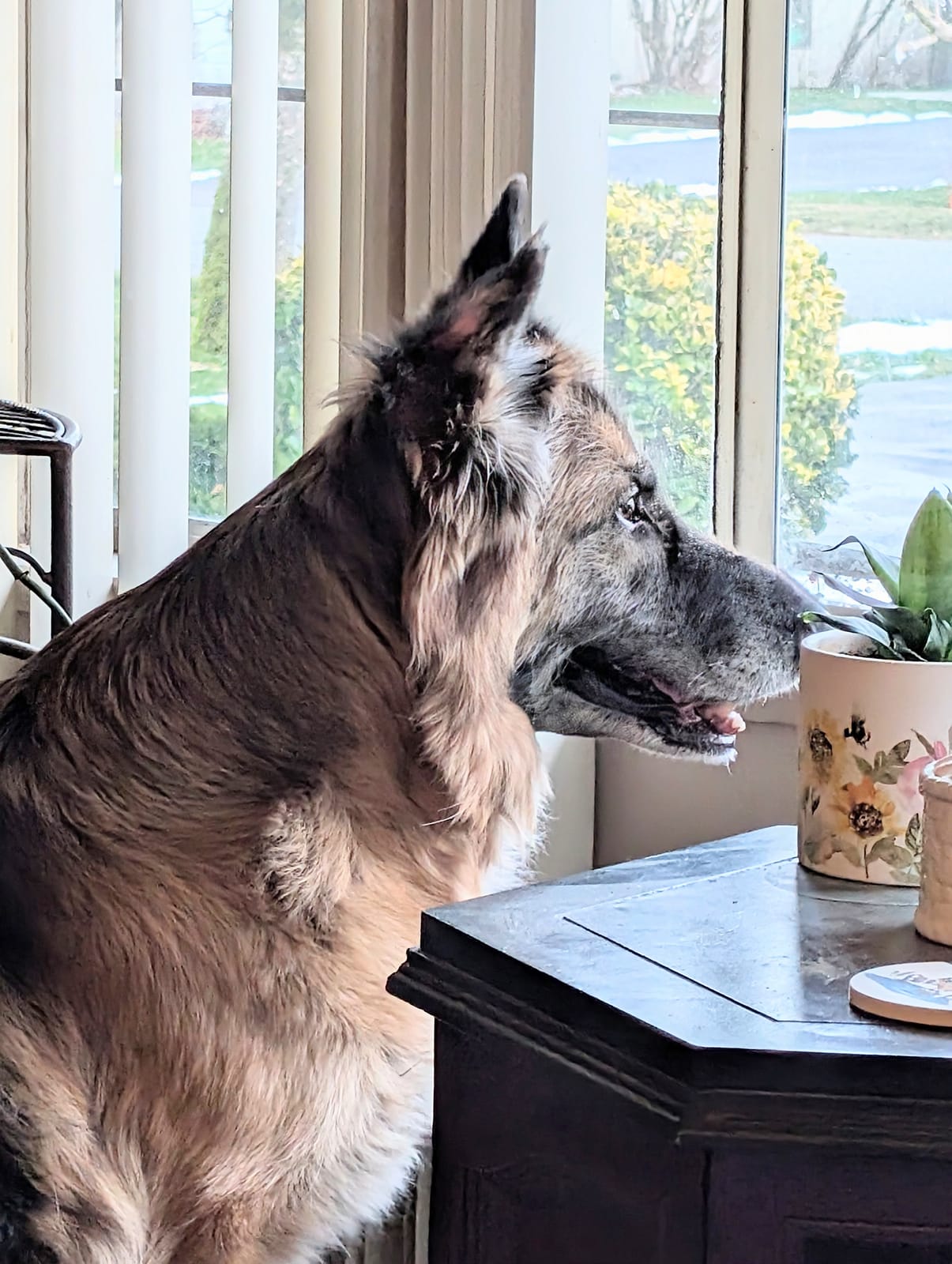
Mia mattered. She still does. And if the cost of loving her was learning how to hold this quieter ache — the kind that reshapes routines, relationships, and the way the door feels when someone comes home — I’d pay it again without hesitation.
Every time.
Because love doesn’t quit.