
Early Health Red Flags in Long-Haired German Shepherds
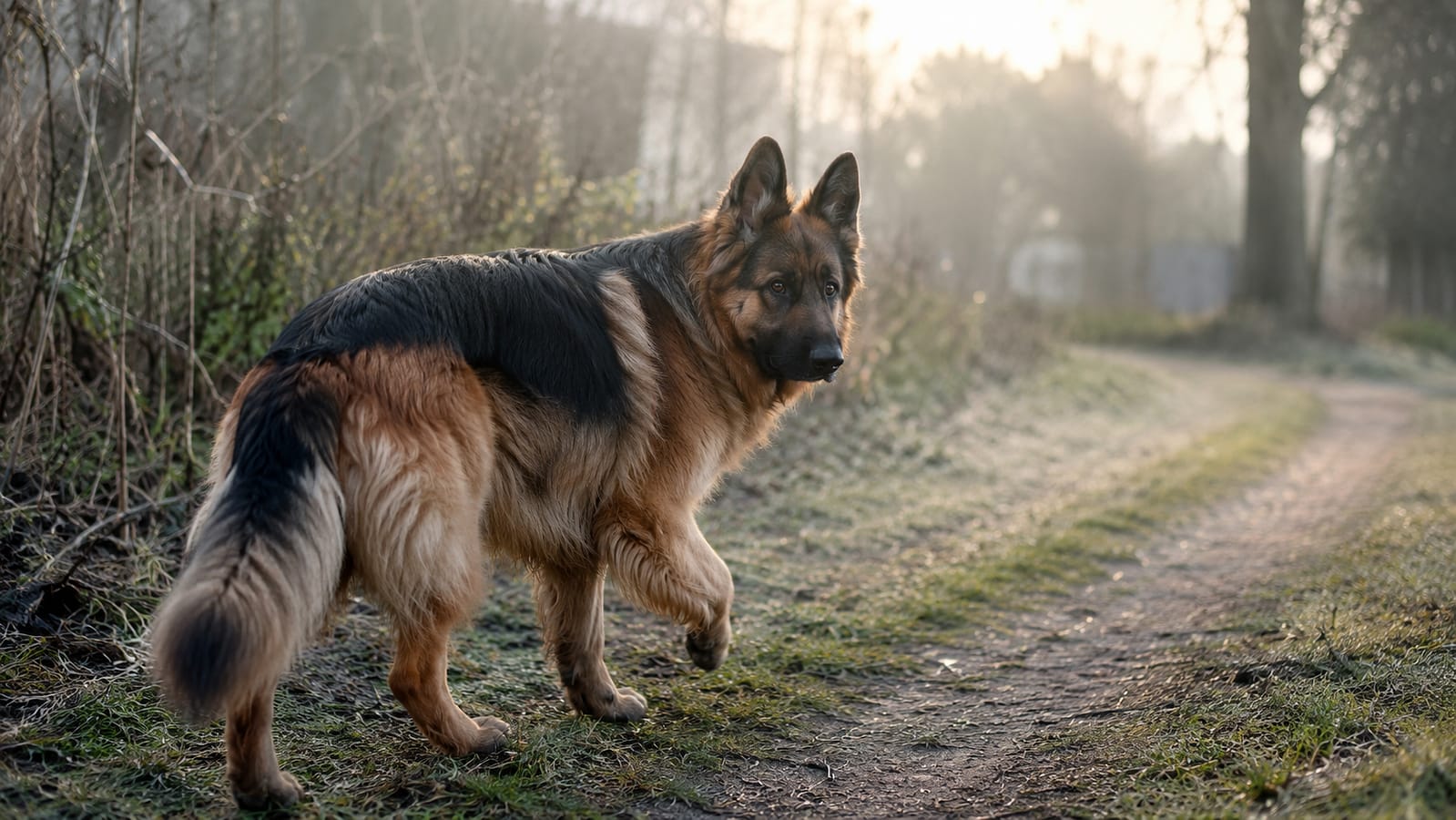
Knowing your dog’s normal is one of the most useful health tools you have.
Not because you can diagnose a long-haired German Shepherd by watching them walk across the kitchen. You can’t.
What you can notice is change.
A dog who normally races to the door starts hanging back. Breakfast suddenly takes convincing. The walk is the same length, but recovery isn’t. They’re taking longer to get up, drinking differently, asking outside more often, sleeping at odd times, or breathing differently when they should be settled.
One of those things on its own may mean very little. A persistent change, a worsening change, or several changes appearing together deserves more attention.
This page is the practical companion to the German Shepherd Health Guide. The Health Guide deals with the broader health picture. This page has a narrower job: what should you actually notice at home, what makes a pattern more meaningful, and when does watching need to turn into a call to the veterinarian?
Start With the Dog You Actually Know
There isn’t one universal German Shepherd baseline.
A three-year-old rescue who arrived six weeks ago, an active eight-year-old who has lived with you for years, and a fourteen-year-old senior aren’t supposed to move, eat, sleep or recover exactly the same way.
That’s why comparisons with somebody else’s dog can only take you so far.
You need to know what is ordinary for this dog.
- How quickly do they normally get up after sleeping?
- How interested are they in food?
- What does a normal bowel movement look like for them?
- How much do they usually drink?
- What is their normal walking pace?
- How do they handle stairs, vehicles and slippery floors?
- How long does normal activity take to recover from?
- Where and how much do they normally sleep?
- How do they normally interact with you and the rest of the household?
- What does relaxed breathing look and sound like for them?
This isn’t obsessive monitoring. Most of it happens naturally when you live with a dog long enough and pay attention.
There is veterinary support for using that knowledge. The American Animal Hospital Association notes that owners know their dogs’ normal behaviour and that departures from it can help identify possible pain. Photographs and short videos can also help veterinarians understand changes that may not show up clearly during an appointment. AAHA’s canine pain-assessment guidance explains that approach here.
Behaviour Changes Can Be Health Information
A behaviour change isn’t automatically medical. It also isn’t automatically training.
That distinction matters with rescue dogs because there are plenty of legitimate behavioural explanations for change: stress, environment, fear, learning, household disruption, unfamiliar people, another animal, or something that happened five minutes before you noticed the behaviour.
But pain and illness can also alter behaviour. Veterinary pain guidance recognizes changes such as withdrawal, reduced interaction, irritability, restlessness, altered sleep, reluctance to be handled and reduced activity as possible signs of discomfort. The Canadian Veterinary Medical Association treats recognition and appropriate management of animal pain as a significant veterinary welfare issue.
So when a dog who usually follows you upstairs suddenly doesn’t, the answer isn’t to announce that the dog is stubborn, arthritic, anxious or anything else.
Notice it first, then look at the rest of the dog.
- Did anything else change?
- Does it happen every time or only occasionally?
- Is the dog slower somewhere else too?
- Are they eating normally?
- Are they comfortable getting up and lying down?
- Did the change begin suddenly?
- Is it becoming more frequent?
That gives you useful information without pretending you know the cause.
Watch Movement, Not Just Limping
A dramatic limp is easy to notice. Smaller changes in movement can be easier to dismiss.
Pay attention when a dog starts taking longer to rise, hesitates before stairs, changes how they get into the vehicle, avoids flooring they used to cross normally, shortens their stride, stops jumping onto something they used to reach comfortably, or consistently falls behind on a familiar walk.
None of those observations identifies the cause. They can occur with pain or physical limitation, but determining why requires veterinary assessment when the change persists, worsens or is significant.
Recovery matters too.
If your Shepherd does the same ordinary walk they’ve done for months but now needs much longer to settle afterward, seems unusually stiff later in the day, or is noticeably less willing to repeat normal activity, that change belongs in the picture.
Don’t force extra activity just to see whether they can still do it. You’re gathering information, not running a field test.
Appetite and Drinking: Look for Change, Not One Missed Meal
Dogs occasionally eat less. They may be tired, stressed, distracted, hot, unimpressed with dinner or holding out because somebody introduced them to chicken yesterday and kibble has suddenly become an insult.
The useful question is whether the change is unusual for your dog and whether anything else is happening with it.
- Are they repeatedly leaving food they normally finish?
- Has their enthusiasm for food clearly changed?
- Are they having difficulty chewing, swallowing or lowering their head?
- Are they drinking noticeably more or less than usual?
- Has appetite changed along with vomiting, diarrhea, weakness, pain, weight change or reduced energy?
Veterinary pain guidance includes decreased appetite among the changes owners may notice when a dog is uncomfortable, but appetite loss has many possible causes. Treat it as information that may need veterinary investigation, not as a diagnosis.
Digestion and Bathroom Habits Need Context
Anybody who has lived with dogs for more than five minutes knows that one ugly bowel movement doesn’t automatically mean disaster.
Diet changes, rich treats, scavenging, stress and plenty of other things can upset digestion.
What deserves closer attention is a problem that keeps happening, becomes more severe, contains blood, is accompanied by repeated vomiting, or appears alongside weakness, marked lethargy, pain, dehydration, refusal to eat or another significant change.
Also notice changes in urination or defecation that are new for the dog: unusual frequency, accidents in a reliably housetrained dog, repeated straining, difficulty getting into position, or obvious discomfort.
Again, don’t diagnose the reason from the symptom. Give the veterinarian the pattern.
Energy Is More Useful When You Compare Like With Like
“Low energy” is almost useless without context.
A Shepherd sleeping after a long hike isn’t the same thing as a dog who suddenly loses interest halfway through an ordinary morning walk.
A senior taking longer to recover than they did five years ago isn’t automatically sick. What matters is whether something has changed from their recent baseline.
Watch for things such as unusual fatigue after normal activity, substantially more sleeping than usual, difficulty settling, reduced interest in routines they normally enjoy, or repeated days where the dog simply doesn’t have their usual capacity.
If that reduced energy appears with appetite loss, vomiting or diarrhea, pain, weakness, abnormal breathing, fever identified by your veterinarian, or another significant sign, the combination carries more weight than tiredness by itself.
Breathing Changes Get a Shorter Leash
Breathing is one area where I’m much less interested in prolonged “wait and see.”
Panting after exercise, excitement or heat has an obvious context. New breathing difficulty at rest does not.
Pay attention to breathing that looks more effortful than normal, unusual or persistent panting when the dog isn’t hot or active, new noisy breathing, an inability to settle comfortably because of breathing, or a clear change in how the chest and abdomen move while the dog is resting.
Difficulty breathing can be associated with serious medical problems and shouldn’t be diagnosed at home. AAHA advises immediate veterinary attention for respiratory distress. Its emergency guidance explains the warning signs in more detail.
One Change Versus a Pattern
This is where observation becomes useful.
Suppose your dog is slow getting up one morning.
Maybe they slept awkwardly, the floor was slippery, or yesterday’s walk ran long — or maybe something’s actually developing. You don’t know yet.
Now suppose the same dog is slow getting up for four mornings, stops jumping into the vehicle, falls behind on walks and has started avoiding the stairs.
You still don’t know the diagnosis.
You do know you have a pattern worth discussing with your veterinarian.
The same thinking applies elsewhere. A single skipped meal is different from declining appetite plus weight loss. One loose stool is different from repeated diarrhea with lethargy. An unusually quiet afternoon is different from several days of reduced activity combined with changes in movement or eating.
Patterns don’t tell you what the disease is. They help tell you when the question deserves professional attention.
Persistent, Worsening and Combined Changes Matter More
I’d pay more attention when a change falls into one or more of these categories:
- Persistent: it isn’t returning to the dog’s normal.
- Recurring: it disappears and keeps coming back.
- Worsening: the change is becoming more obvious or interfering more with normal life.
- Combined: movement changes are appearing with appetite loss, digestive problems, weakness, breathing changes or another new sign.
- Function-changing: the dog can no longer comfortably do something that was recently normal for them.
- Sudden and significant: the change is substantial enough that waiting for a pattern would make no sense.
Age matters. Medical history matters. Recent injury matters. Medication changes matter. So does the dog’s individual history.
That’s why the decision about when a non-emergency sign needs an appointment is best made with your veterinary clinic rather than by somebody on the internet who has never examined your dog.
What to Record Before You Call the Vet
You don’t need to arrive with a diagnosis. Useful observations are better.
- What changed?
- When did you first notice it?
- Is it constant or intermittent?
- Is it getting better, worse or staying the same?
- What was the dog doing immediately before it happened?
- Has appetite or drinking changed?
- Have urination or bowel movements changed?
- Has activity, movement, sleep or behaviour changed at the same time?
- Have there been diet, medication, supplement or routine changes?
- Could the dog have eaten or been exposed to something unusual?
If the problem involves movement, breathing, an intermittent episode or a behaviour the dog may not reproduce in the clinic, a short video can be useful. AAHA specifically notes that owner-supplied photographs and video can help veterinary conversations about possible pain.
That gives the veterinary team something far more useful than, “He just seems weird.”
When Not to Wait
This page isn’t an emergency-medicine guide, and I don’t want to turn it into one. But some changes shouldn’t sit on a household watch list while you see what tomorrow brings.
Seek urgent veterinary care for signs such as:
- difficulty or obvious distress while breathing;
- blue, grey or purple gums or tongue;
- collapse, unresponsiveness or severe disorientation;
- a seizure, particularly a first seizure or repeated seizure activity;
- persistent or repeated vomiting or severe diarrhea, particularly with blood, marked weakness or other significant signs;
- another sudden, severe deterioration where your dog is clearly in distress.
AAHA includes respiratory distress, persistent vomiting or diarrhea, unresponsiveness and seizures among signs that can require emergency veterinary attention. Read its emergency guidance here.
If you aren’t sure whether what you’re seeing is an emergency, call your veterinarian or the nearest veterinary emergency hospital and describe what is happening. Triage is their job. You don’t have to decide the diagnosis before you make the call.
Where Cancer Fits Into This
Some of the changes on this page can occur in dogs with cancer. They can also occur with many conditions that have nothing to do with cancer.
That distinction matters because once you’ve lived through cancer with a dog, it becomes very easy to look at every limp, tired afternoon or missed meal and mentally jump straight there.
Don’t ignore a persistent change, but don’t diagnose cancer from one either.
New or changing masses, unexplained weight loss, persistent lameness, recurring unexplained weakness, abdominal enlargement or other ongoing changes should be discussed with your veterinarian. If cancer is the specific concern, the German Shepherd Cancer Guide explains the broader risks, signs, diagnostic process and decisions without turning every symptom into a cancer prediction.
You’re Observing, Not Diagnosing
This is the line I think owners need to keep clear.
You know your dog in ways your veterinarian can’t. You see them first thing in the morning. You know how they walk when nobody is watching, how they eat, where they sleep, how they climb into the vehicle and exactly how annoying they become when dinner is four minutes late.
Your veterinarian has something you don’t: the training, examination, diagnostic tools and medical judgment needed to work out why the change is happening.
Those two forms of information belong together.
The owner notices that something has changed. The veterinarian investigates what that change may mean.
That is a much safer approach than either extreme — dismissing every change until the dog is obviously ill, or turning every odd morning into a diagnosis assembled from search results.
The Practical Standard
Know what normal looks like for your dog.
When something changes, look at the whole picture. Ask whether it is isolated, persistent, recurring, worsening or appearing alongside other changes. Consider the context without explaining the problem away.
Then make the decision that actually belongs to you: keep observing, call your regular veterinarian, book an examination, or get urgent help.
You don’t need the diagnosis before you call — you just need to know your dog well enough to notice when normal’s changed.
Where to Go Next
For the broader health picture — prevention, movement, body condition, ageing, veterinary care and the health realities that come with the breed — return to the German Shepherd Health Guide.
If the change you’re investigating has raised a specific concern about cancer, continue with the German Shepherd Cancer Guide.
Medical note: Fluffy Shepherds shares lived experience, observation and veterinary information for educational purposes. It does not diagnose illness or replace veterinary care. If your dog is showing new, persistent, worsening or severe symptoms, contact your veterinarian. For difficulty breathing, collapse, seizures, unresponsiveness or other signs of acute distress, seek urgent veterinary care.