
Care for a Rescued Long-Haired German Shepherd
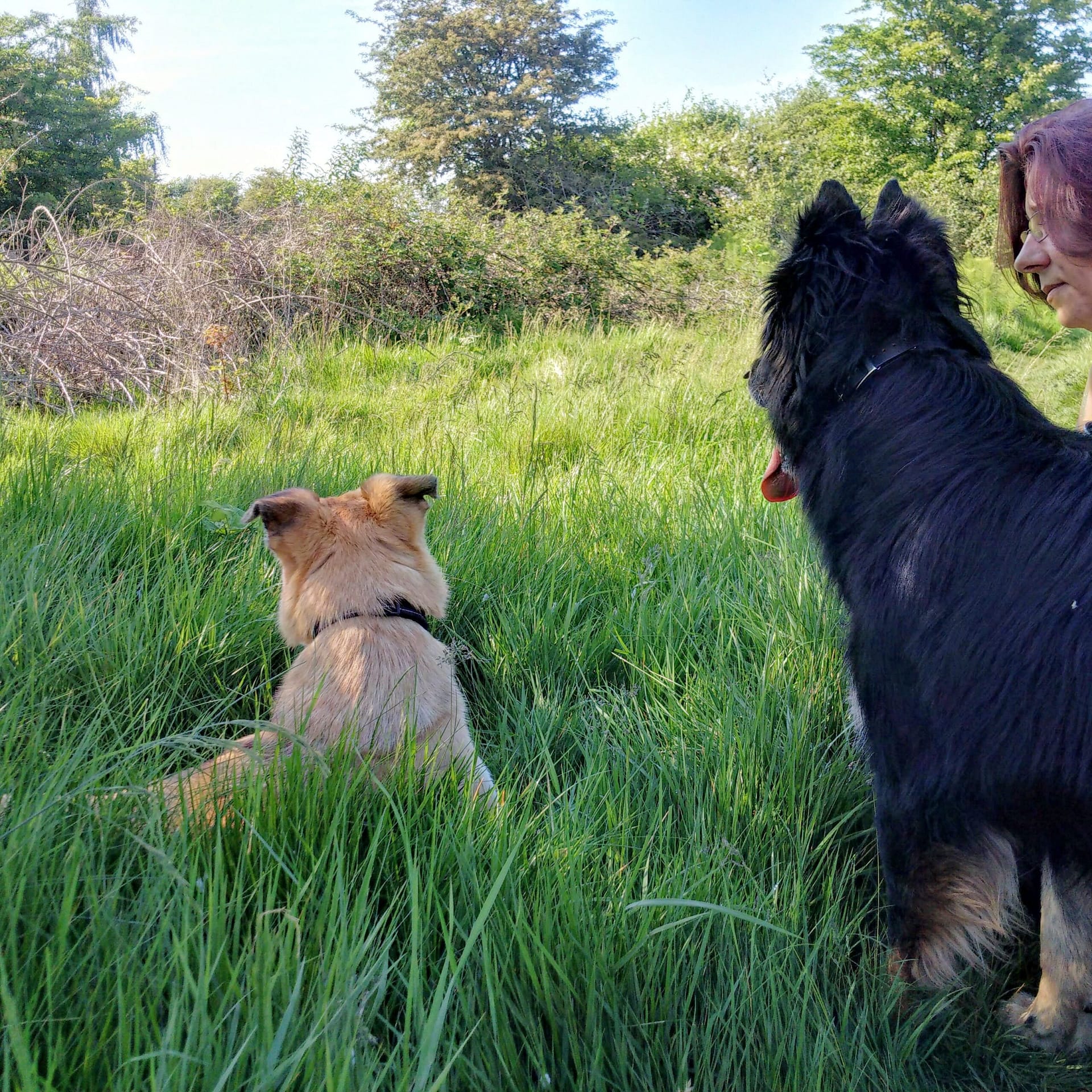
Living with a rescued long-haired German Shepherd changes what the word care means.
Of course there is food, grooming, exercise, veterinary care and all the ordinary work of sharing your home with a large dog. But a rescue usually arrives with something else: a history you may know only partly, or not at all. You may not know how much exercise they had, what frightened them, whether somebody brushed them regularly, what their normal behaviour looked like or which parts of the world they learned were safe.
So the starting point is not a perfect routine downloaded from somebody else’s dog. It is respect for the dog standing in front of you. That means watching before assuming, building predictable routines before piling on expectations and learning what is normal for this shepherd. Over time, that baseline becomes one of the most useful things you have. It helps you recognize when behaviour is changing, when exercise is too much or too little, when a coat problem is developing and sometimes when something physical simply isn’t right.
This page is our starting point for the everyday work of caring for a rescued long-haired German Shepherd. Where a subject needs more room, we’ll take you to the deeper guide.
The care principle
Start With the Dog You Actually Brought Home
Rescue gives us a dog, not a complete biography. Early behaviour gives you information, but not a final verdict on who that dog is going to become. Start with enough quiet, routine and predictability that you can begin learning the dog rather than immediately asking the dog to perform your idea of a new life.
Some shepherds arrive confident and curious. Others are quiet, restless, watchful, overexcited, shut down or apparently perfect for the first few days. None of those first impressions tells you everything about the dog you will eventually know.
Behaviour can change as an adopted dog adjusts to a new environment, routine and relationship. That is one reason we do not treat early behaviour as a permanent personality assessment.
If your shepherd has just come home, resist the urge to show them their entire new life in the first weekend. They do not need every relative, every neighbourhood dog, three pet stores and a tour of greater Vancouver before they have figured out where they sleep. They need enough quiet to begin making sense of the place.
If your dog is newly adopted: start with The First 90 Days before trying to build a full activity schedule.
Respect Comes Before Structure
We talk a lot about structure at Fluffy Shepherds, but structure does not mean controlling every move a dog makes. And it certainly does not mean proving that the human is tougher than the German Shepherd. That contest has produced enough bad dog advice already.
In practical terms, respect means learning the dog’s signals, giving them room when they genuinely need it, being clear when something is not negotiable and becoming predictable enough that the dog does not have to keep guessing what happens next.
A useful routine might include regular meal times, walks, quiet periods, grooming, short training sessions and a reasonably consistent rhythm to the day. The exact clock matters less than the reliability of the pattern.
With rescues especially, structure should make life easier to understand without making life smaller. We have lived with shepherds who needed more guidance in one area and very little in another. You are not trying to impose somebody else’s idea of the perfect German Shepherd household. You are building a life that works for the dog and the people actually living in it.
The Long Coat Is Part of the Job
The long coat is beautiful. It is also very good at collecting evidence of wherever your shepherd has been.
Mud, twigs, burrs, loose undercoat and half the forest can come home attached to one dog. In coastal British Columbia, add rain and wet winter ground and you quickly learn that coat care is not an occasional cosmetic exercise.
How often you need to brush depends on the individual coat, the season and what the dog has been doing. During heavy shedding periods or after wet, messy walks, you may need to do considerably more. The useful rule is simpler than a fixed calendar: brush often enough that you are not allowing tangles, compacted loose coat or mats to become established.
Pay particular attention behind the ears, around the neck and mane, the feathering on the legs, the tail and anywhere friction encourages tangling.
For the deeper coat-care work, continue into the German Shepherd Grooming Guide.
Grooming Is Also Inspection Time
This is something we learned to value more as our dogs aged. Your hands are already moving over the animal, so use the opportunity. Notice the skin. Feel the body underneath all that coat. Learn what the ribs, shoulders, hips and abdomen normally feel like. Look at paws and nails. Notice new lumps, tender areas, skin irritation, changes in body condition or a reaction to being touched somewhere that was previously unremarkable.
Finding something different does not tell you what it is. It tells you that something changed, which is useful information. A lump is not automatically cancer. A sensitive hip is not automatically dysplasia. If a change persists, concerns you or arrives with other symptoms, that belongs in a conversation with your veterinarian.
Learn Your Dog’s Normal
One of the most useful things we can do for any rescue is establish a baseline. How do they normally get out of bed? How do they climb stairs? How hungry are they in the morning? What does a relaxed walk look like? Where do they sleep? How quickly do they recover after exercise? Are they normally glued to you or happy sleeping in another room?
You do not need to turn your home into a veterinary laboratory. You just need to notice.
Changes in mobility, posture, appetite, sleep, social behaviour and willingness to do familiar activities can be associated with pain or illness. Veterinary pain guidance specifically asks owners to pay attention to changes in normal behaviour because the person living with the animal often sees those changes first.
Source: American Animal Hospital Association — Behavioural Signs of Pain.
The important part is not assuming that every behavioural change is medical. It is remembering that behaviour and health are not separate worlds.
Exercise Is Not a Contest to Tire Them Out
German Shepherds need activity. That does not mean the answer to every behavioural problem is another five kilometres.
A rescued shepherd may arrive under-conditioned, overweight, physically uncomfortable, over-aroused by the outside world or perfectly capable of walking farther than their judgment currently allows. Age matters. Health matters. Previous conditioning matters. Weather matters. And the dog’s emotional state matters.
That is why we prefer purposeful activity over exercise for exercise’s sake. Walks can provide movement, sniffing, environmental information, training and time with you. Short training sessions can be mentally tiring without winding a dog up physically. Nosework, tracking and problem-solving can give a German Shepherd something useful to do with that enormous head beyond monitoring the neighbour’s recycling bins for national-security threats.
Watch recovery as well as performance. A dog who can complete an activity is not automatically a dog who benefited from that amount of activity. If exercise is followed by unusual stiffness, reluctance to get up, persistent lameness, marked fatigue or another change that concerns you, that is not something to solve by pushing through it.
Socialization Does Not Mean Meeting Everybody
This matters particularly with rescue dogs. A shepherd does not need to greet every dog on the sidewalk to become a well-adjusted member of society. They do not have to enjoy strangers touching them. And an uncertain dog does not necessarily become more confident because we keep exposing them to more of whatever is making them uncertain.
For us, useful social experience means learning to move through the real world without being overwhelmed by it. Sometimes that includes greeting somebody. Other times it means watching another dog from across the street and continuing the walk, or moving through a busy place without needing to interact with anybody at all.
Pay attention to the individual in front of you. A rescue dog’s history may explain some behaviour, but we should be careful not to manufacture a trauma story every time a dog dislikes something. We often do not know what happened before adoption. What we can know is what the dog is showing us now, and that is enough to begin.
If behaviour is becoming the larger question, move from Care into The Shepherd Mind.
Food: Consistency First, Dogma Never
Dog food may be one of the few subjects capable of turning sensible adults into rival religious factions. We are not doing that here.
A rescued dog may arrive eating a food you would not have chosen, eating inconsistently, carrying too much or too little weight, or with digestive problems that need proper veterinary assessment. Unless there is a medical reason to act immediately, abrupt changes made in the excitement of adoption can add another variable when almost everything in the dog’s life has already changed.
Our approach is to keep nutrition evidence-based and individual. Body condition, age, activity, medical needs, tolerance and veterinary guidance matter more than whether a particular diet is fashionable this year.
Source: World Small Animal Veterinary Association — Global Nutrition Guidelines.
If your dog has ongoing diarrhea, vomiting, significant appetite changes, unexplained weight change or another persistent problem, that has moved beyond ordinary feeding advice. Talk to your veterinarian.
Health: Watch the Dog, Not Just the Diagnosis List
German Shepherd Dogs have recognized health concerns, including orthopedic conditions such as hip and elbow dysplasia, while genetic testing is also available for conditions including degenerative myelopathy.
Source: German Shepherd Dog Club of America — Health & Genetics Committee.
That does not mean your dog is destined to develop any particular disease. Breed risk is not diagnosis.
For a rescue, you may also have incomplete family history or no reliable family history at all. That makes the everyday baseline even more useful. Know how your dog normally moves. Know their usual appetite and energy. Know the lumps and bumps already investigated. Pay attention when something changes and remains changed.
We learned this lesson through experience we would never have chosen. Tia, Bishop and Mia each faced cancer, and none of those journeys looked exactly like the others. That does not make us veterinary oncologists. It makes us people who understand why vague instructions like “just keep an eye on it” can feel painfully inadequate when the dog is yours.
Our health pages separate what we have personally lived through from what veterinary evidence can establish.
If cancer or a serious diagnosis is the question in front of you, continue to the German Shepherd Cancer Guide.
A Canadian Reality: Care Depends on Where You Live
Most of caring for a shepherd is not uniquely Canadian. Brushing a dog works pretty much the same on either side of the border.
But geography matters when it actually changes the decision. Weather changes daily management. Veterinary access varies enormously between major centres and smaller communities. Specialty services may require travel. Emergency coverage is not equally available everywhere. A dog living through a wet Lower Mainland winter has different practical coat and footing problems from one living through a Prairie cold snap or an Ontario summer.
That is why our Canadian-first approach is not about pretending Canadian dogs require Canadian brushing. It is about acknowledging the real environment in which care decisions are made. Whenever location materially changes the answer, we will say so.
Senior Care Begins Before You Call Them Old
One of the traps with German Shepherds is waiting for a dramatic sign that the dog has become a senior. Real life is usually quieter than that.
The walk changes a little. Recovery takes longer. A dog hesitates before jumping into a vehicle they used to launch themselves into. Stairs require thought. Sleep changes. Muscle condition changes. They still want to come with you, but wanting to do something and recovering comfortably from doing it are no longer exactly the same question.
Those changes deserve attention rather than automatic explanations about “just getting old.” Aging can be normal. Pain and disease can also appear during aging. Your veterinarian is the person who helps separate those possibilities.
For us, senior care became less about preserving the old routine at all costs and more about continually asking whether the routine still served the dog. Sometimes that means another walk. Other days it means recognizing that turning around early is the better choice.
When the question changes
When Something Feels Off
You will occasionally notice something you cannot yet explain. Your shepherd may be moving more slowly, eating differently, avoiding touch somewhere, sleeping differently, withdrawing, panting unexpectedly, stumbling, becoming unusually irritable or simply doing something that is wrong for them.
Observation is valuable, but it is not diagnosis. If a change is sudden, severe, persistent, painful or simply worries you, contact a veterinarian. Collapse, difficulty breathing, uncontrolled bleeding, repeated unproductive retching, significant trauma and other acute emergencies need urgent veterinary attention rather than an internet article.
Knowing your dog well does not make you the vet. It can make you a much better witness when something changes.
Care Is the Life You Build Around Them
After enough years with German Shepherds, I have a hard time reducing care to a list of products, feeding instructions and exercise minutes. The brush, the food, veterinary care and training all matter, but most of a dog’s life happens between those things.
It happens in the same morning walk you have taken hundreds of times. In knowing whether today feels different. In wiping wet paws at the door. In changing a plan because the dog has had enough. In noticing a lump. In putting the leash on when freedom has not been earned yet, and taking pressure off when the dog needs room rather than another command.
That is especially true with a rescue because you are building the relationship while you are still learning the dog. You will get some things wrong. We certainly have. The important part is paying enough attention to change course when the dog teaches you something you did not know yesterday.
That is care as we understand it at Fluffy Shepherds: start with respect, pay attention, learn the dog in front of you and keep showing up.
Start with the problem in front of you
Where To Go Next
You do not need to read the entire site because you landed on the Care page. Choose the question you actually have today.
Fluffy Shepherds shares lived experience, observation and evidence-informed guidance. It does not replace veterinary diagnosis or treatment. When your dog’s health is in question, involve your veterinarian.
Because Love Doesn’t Quit.