
When Cancer Enters the Pack
What Three Shepherds Taught Us About Time, Choice, and Responsibility
Cancer doesn’t arrive the same way twice. When it entered our pack, Tia, Bishop, and Mia each took us down a completely different road.
I’m not a veterinarian. I’m someone who’s sat in those rooms more times than I ever wanted to. This isn’t another cancer guide. We already have one of those. This page is about what happened after the diagnosis became personal — the decisions, the uncertainty, and what three very different dogs taught Cheryl and me while we were living through it.
If you’re in that position now, I can’t tell you what your dog’s road will look like. I can tell you what ours looked like.
Before You Continue
These are our dogs’ stories, not instructions for somebody else’s dog. Tia had osteosarcoma. Bishop’s time after diagnosis was brutally short. Mia lived with mammary cancer for months. Their treatment options, tolerance, timelines, and outcomes were different.
For the medical side — warning signs, diagnosis, treatment options, specific cancers, specialists, and the larger care decisions — start with the German Shepherd Cancer Guide and Cancer & Complex Care. What follows here is the lived part.
Our dogs · lived experience
Tia — When Time Still Exists
Osteosarcoma • Extended Timeline • Major Treatment Decisions
Tia’s diagnosis forced major decisions quickly, but it still gave us something Bishop wouldn’t later get: time to make them.
We had to think about amputation, pain, recovery, quality of life, and what she could realistically handle. None of it came with guarantees. For the full medical side of what happened with Tia, her story belongs on the Osteosarcoma in German Shepherds page. What stayed with me here was what happened after surgery.
Three hours after coming home, Tia was already trying to get back onto her bed. She failed. Then she failed again. Then a third time. On the fourth attempt, she made it.
At the same time, she was figuring out how to walk by leaning and adjusting her balance. Cheryl and I were still worrying about how she’d adapt. Tia had apparently moved on to solving the problem.
That didn’t make the cancer smaller or the decisions easier. It changed how I looked at her. We were carrying the diagnosis. She was dealing with the day in front of her.
After that, I paid more attention to the dog in front of me and a little less to the disaster my own head was capable of building three weeks down the road.
Our dogs · lived experience
Bishop — When Time Disappears
Rapid Loss • Almost No Intervention Window

Bishop’s story is shorter because cancer gave us less time.
There was no long adaptation period and no months of weighing options. Bishop lived only eleven days after diagnosis. Eleven days isn’t much time to process what you’re hearing, never mind get yourself ready for where it’s going.
What I remember most is that Bishop didn’t change. The diagnosis changed everything for Cheryl and me. It changed almost nothing for him. He still carried himself the same way, moved through the house like Bishop, and looked at us the same way.
He had no idea we’d already made the decision we hoped we’d never have to make. While we were counting days and preparing ourselves for loss, Bishop was simply living the days he had left.
That’s the part that still gets me. The knowledge belonged to us. Bishop just kept being Bishop.
There wasn’t some grand treatment campaign we failed to discover in time. Sometimes the window really is that small. Accepting that didn’t make those fourteen days hurt less, but it stopped me from pretending there had to be a better ending hidden somewhere if only we’d looked harder.
Our dogs · lived experience
Mia — When Hope and Reality Walk Together
Mammary Cancer • Staged Decisions • Uncertain Outcomes
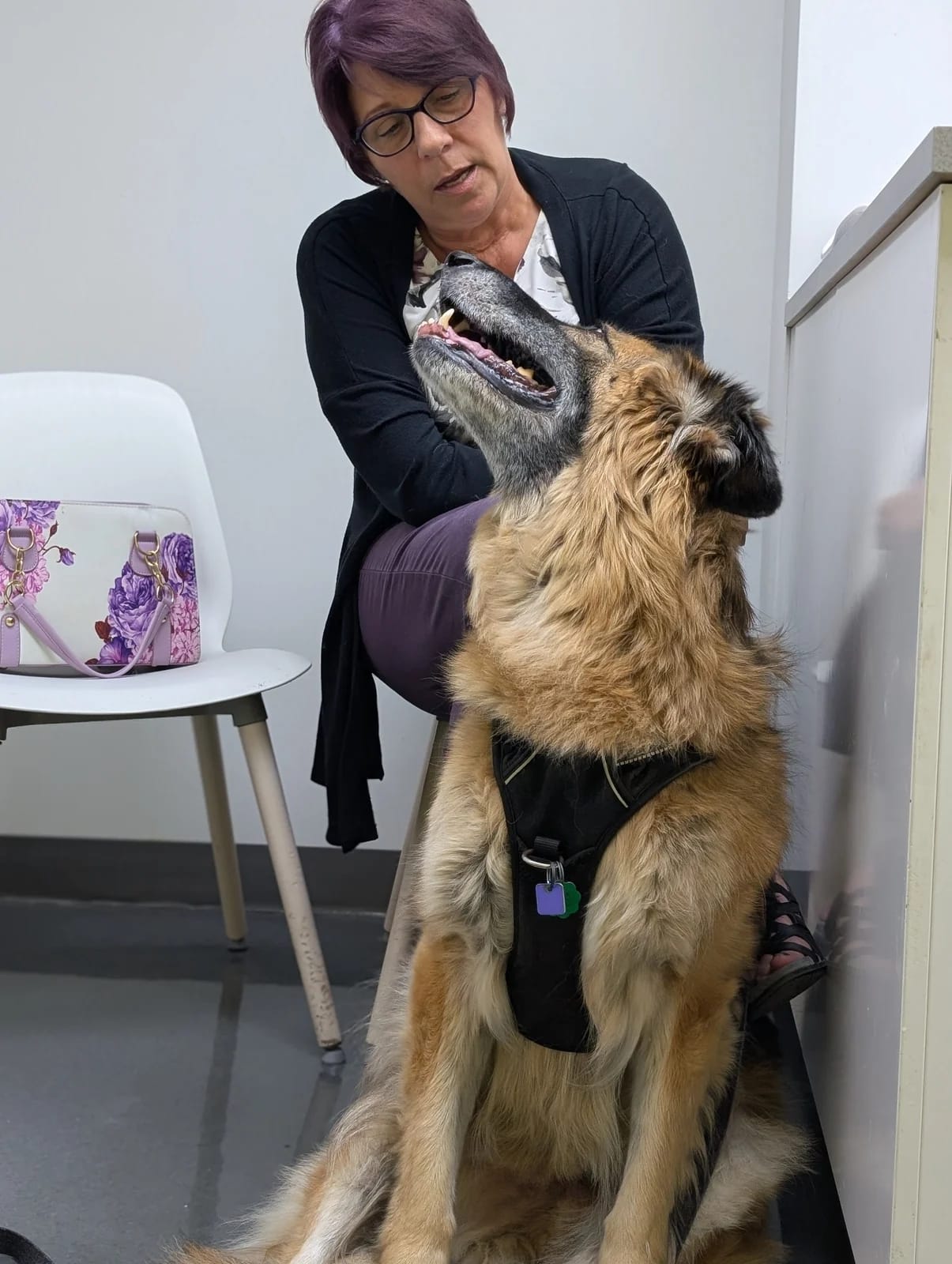
Mia’s journey lasted months. Concern became diagnosis, then surgery, then more conversations about recurrence, progression, and how much of her independence she could keep.
As the cancer progressed, it eventually reached her spine. Standing became harder. If you knew Mia, you also knew better than to assume that meant she wanted you taking over.
Your first instinct was to help her up. You could steady her. You could encourage her. But the moment you stepped back, she wanted to do it herself.
Sometimes it took a while. Sometimes I found myself holding my breath while she worked through it. She kept getting there until the day she couldn’t.
That mattered because it told us something about Mia that no test result could: independence still mattered to her. We had to keep making medical decisions, but we also had to keep looking at the dog living inside those decisions.
The broader medical information about mammary cancer belongs in the German Shepherd Cancer Guide. On this page, what matters is that Mia had months where hope and reality had to live in the same house. Some days were good. Some weren’t. Pretending either one didn’t exist would’ve been dishonest.
Mia is no longer with us. A lot of what exists inside Fluffy Shepherds today was shaped by those months with her.
How Do You Keep Doing This?
People ask sometimes how we keep opening our home knowing where some of these stories eventually go.
I don’t have a clever answer. The dogs don’t choose their genetics, their histories, or what disease eventually finds them. What Cheryl and I do get to choose is whether we’re still there when things stop being easy.
Doing it before doesn’t make the next time easier. If anything, you know more about what may be coming. But the responsibility is still to the dog who’s actually in front of you, not the dogs you’ve already lost and not the ending you’re afraid of repeating.
The Questions We Kept Coming Back To
We didn’t have one perfect framework. But whenever the medical information got complicated or emotion started running ahead of us, we kept coming back to the same basic things: what does this dog need right now, what can this dog realistically tolerate, and are we still protecting quality of life rather than chasing time for our own sake?
The answers weren’t always obvious, and they weren’t the same for Tia, Bishop, and Mia. That’s the point. The questions stayed useful because the dog stayed at the centre of them.
If You’re In This Now
I can’t tell you to stop being scared. We were scared too, and knowing more didn’t magically remove it.
What helped was refusing to live every possible ending at once. With Tia, Bishop, and Mia, the next decision was enough until there actually was another one to make.
For the medical questions, use your veterinarian and the deeper cancer resources on this site. For the part nobody can chart on a test result, keep looking at your dog. That’s where we kept finding our way back.
Continue Reading
Start Here
Specific Conditions
- Osteosarcoma in German Shepherds
- Early Health Red Flags in Long-Haired German Shepherds
- Shepherd Emergencies
The Bigger Picture
Final Thought
When I think back on those three dogs, I don’t remember three versions of the same cancer story. I remember Tia trying four times to get back onto her bed. I remember Bishop still being completely himself while Cheryl and I carried information he never had to understand. I remember Mia refusing help because she wasn’t finished doing things for herself.
That’s what stayed with me. Not a lesson I can package neatly. Just three dogs, three very different roads, and the responsibility to keep paying attention to the one who was still there.
Because Love Doesn’t Quit. 🐾